"Contact a professional to verify the condition of the roof." That line sits printed on the Arizona Association of REALTORS Seller's Property Disclosure Statement, right above the section where a seller answers questions about leaks and repairs. Most buyers skim past it. In West Sedona, where flat and low-slope rooflines are common on the area's mid-century ranch homes and canyon-carved lots, that sentence is not boilerplate. It is a warning that the general home inspection you just paid for may not have told you what you think it told you.
Here is the pattern. A buyer writes an offer, opens the standard inspection period, and hires a licensed general inspector who walks the property, checks the systems, and produces a report. On a house with an asphalt shingle roof, that report usually gives a clear read: sound, aging, or in need of repair. On a house with a spray polyurethane foam roof, which is the material most flat roofs in this part of Sedona are finished in, the report often lands somewhere else entirely. It recommends a specialist evaluation rather than a definitive assessment.
Why West Sedona's Rooflines Are Different
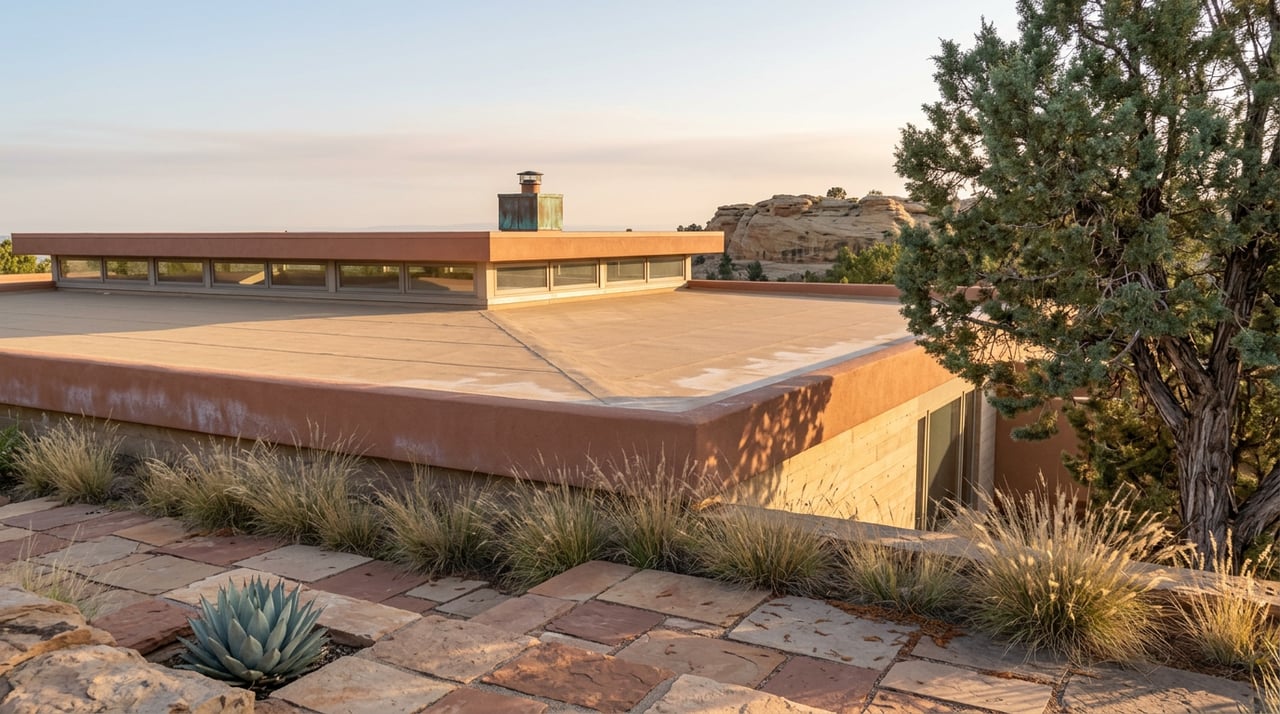
West Sedona carries a mix of housing stock, but a meaningful share of it leans low-slope: mid-century ranch homes tucked into shaded corridors and newer builds cut into sloped, rocky lots where a flat roofline suits the site better than a pitched one. Local inspection firms that work this market describe the terrain itself as a factor. Sloped lots raise drainage and grading questions. The elevation and UV exposure accelerate wear on roofing materials faster than in lower-elevation Arizona markets. Monsoon season can expose flashing failures on flat roofs almost overnight. Flat and low-slope roofs in this climate are typically finished with spray foam because it creates a seamless, waterproof membrane without the seams a shingle or tile roof would need to shed water on a pitch.
That construction choice makes sense for the climate. It also means a meaningful share of West Sedona's housing stock carries a roofing system that may need a specialist evaluation in addition to a general home inspection.
What the Generalist Can't Tell You
This is not a knock on general inspectors. Spray foam roofing is a specialized system, and evaluating it properly means understanding the difference between a topcoat that has simply aged in the sun and a foam layer underneath that has started to degrade, pond water, or delaminate. Most general inspectors will look at a foam roof, note visible wear, and recommend a foam roofing specialist take a closer look before anyone relies on the finding. That is the honest, professional response. Buyers should plan for that possibility within the inspection timeline.
The report may identify the need for a specialist, while the inspection deadline continues to approach.
Recoat Is Not the Same Answer as Restoration
Once a specialist is involved, the conversation usually turns to one of two services, and confusing them is where buyers lose leverage.
| Recoat | Full Restoration | |
|---|---|---|
| What it addresses | The UV-protective topcoat only | The foam layer itself, plus the topcoat |
| What it fixes | Sun damage to the surface finish | Ponding water, foam degradation, structural wear |
| What it does not do | Change the foam structure or fix leaks | N/A, it is the complete fix |
| Best used when | The foam underneath is still sound | The foam is damaged, cracked, or deteriorating |
A seller's disclosure that says "roof recoated in 2023" sounds reassuring. It answers nothing about whether the foam underneath needed more than a topcoat refresh. A recoat recommendation alone does not establish whether the foam beneath the topcoat was evaluated. Buyers should not treat "recently recoated" as confirmation that the foam itself was inspected.
Planning for the Inspection Timeline
Here is where the mechanics matter more than the roofing chemistry. The Property Professor explains that under the standard Arizona purchase contract, the seller has three days after contract acceptance to deliver the completed disclosure statement. The buyer's inspection period is negotiable, and sellers in a competitive market sometimes shorten it. If a general inspector's report lands on day five or six and recommends a foam roofing specialist, the buyer now has to find a qualified contractor, get them on the roof, receive a report, and decide whether to negotiate or walk, all inside whatever days remain before the contingency deadline.
This is where timing matters: a buyer should understand the inspection period and allow time for a specialist evaluation. The general inspection did its job. It just didn't do the job the buyer assumed it would.
What This Means If You're Selling
A pre-listing evaluation from a foam roofing specialist, not just a general home inspection, removes the ambiguity before a buyer's clock ever starts. If the roof needs a restoration, you can price that in or complete it before listing. If it only needs a recoat, you have documentation to attach to your disclosure statement rather than leaving a buyer to determine during the contingency period whether the foam itself was evaluated. Arizona sellers are expected to attach available invoices, receipts, and warranty information to their disclosure statement, and a foam roof with a documented service history is a meaningfully different negotiating position than one with none. It is also worth remembering that disclosure obligations do not end at closing. Nondisclosure of a known material defect can expose a seller to a claim well after the sale, which is one more reason getting ahead of the question is worth more than hoping it doesn't come up.
What This Means If You're Buying
Ask before you write the offer, not after your inspector's report arrives. If a property has a visibly flat or low-slope roofline, ask your agent whether the roof is spray foam and whether the disclosure statement mentions a recoat, a restoration, or neither. If it's foam, consider negotiating a longer inspection period upfront rather than discovering on day six that you need one. And when a seller's disclosure or a contractor's estimate mentions a recoat, ask the follow-up question directly: was the foam itself evaluated, or just the topcoat refreshed? The answer changes what you're actually buying.
Frequently Asked Questions
Does every home in West Sedona have a foam roof? No. Pitched roofs with shingle or tile are common throughout the area. Flat and low-slope roofs, which are typically finished in spray foam, are concentrated in the mid-century ranch homes and homes built on sloped, canyon-cut lots that favor a flat profile.
If my general inspector didn't flag anything on the roof, am I in the clear? Not necessarily. A general inspector's role is to note visible condition and recommend further evaluation when a system falls outside their specialized training. A foam roof with no obvious surface damage can still warrant a specialist's look, particularly if the disclosure statement is vague about service history.
Is a recoat ever the right answer? Yes, when the foam underneath is confirmed sound and the roof only needs UV protection restored. The problem isn't the recoat itself. It's treating a recoat as proof that the foam was inspected when it may not have been.
How much time should I build in if I know a home has a foam roof? There's no universal number, since it depends on contractor availability in a given week. The safer approach is to raise the question with your agent before the inspection period starts, not after a generalist's report pushes you toward the deadline.
A flat roof in West Sedona is not a red flag. It is simply a system that asks a more specific question than most buyers and sellers know to ask, at a moment in the timeline that doesn't leave much room to ask it twice. Getting that question answered early, on either side of the transaction, is the kind of detail that keeps a good roof from becoming a last-minute crisis and keeps a real problem from becoming a post-closing dispute.
If you're buying or selling a home in West Sedona and want someone who reads the fine print on the disclosure form the way a contract attorney would, not just the way a form gets filled out, Oak Creek Realty is built for exactly that. Schedule a free consultation and let's walk through what your specific property, and its roof, actually need before you're up against a deadline.
This article is general information, not legal, tax or financial advice. Consult a qualified professional about your situation.