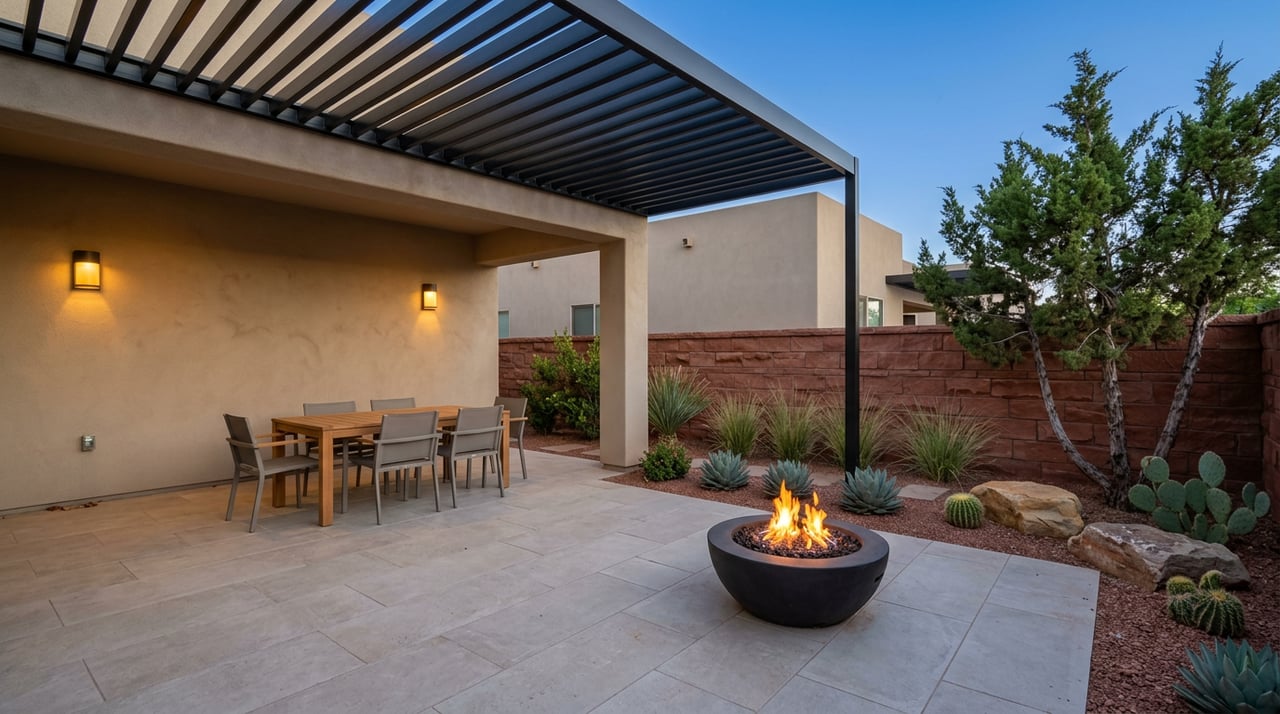
You bought in Sedona for the red-rock views, so your outdoor spaces should feel as inspiring as your living room. The good news is you can design for comfort and beauty while staying water-wise, Firewise, and dark-sky compliant. In this guide, you’ll learn practical, local-first ideas that work with Sedona’s climate and rules, plus plant and material tips that look great year-round. Let’s dive in.
Plan for Sedona’s climate
Sedona sits at about 4,430 feet, which means strong sun, low humidity, big day-to-night temperature swings, and a July–August monsoon window. The elevation and climate shape your choices for shade, materials, and drainage. You can confirm local elevation context in the NOAA station data for Sedona.
Choose UV-stable finishes, breathable outdoor fabrics, and quick-drain cushions. On any patio or terrace, plan gentle drainage and runoff routes so monsoon storms do not collect near the house. For anything exposed to winter moisture, use materials rated for freeze/thaw cycles and avoid standing water at edges.
Frame the red‑rock views
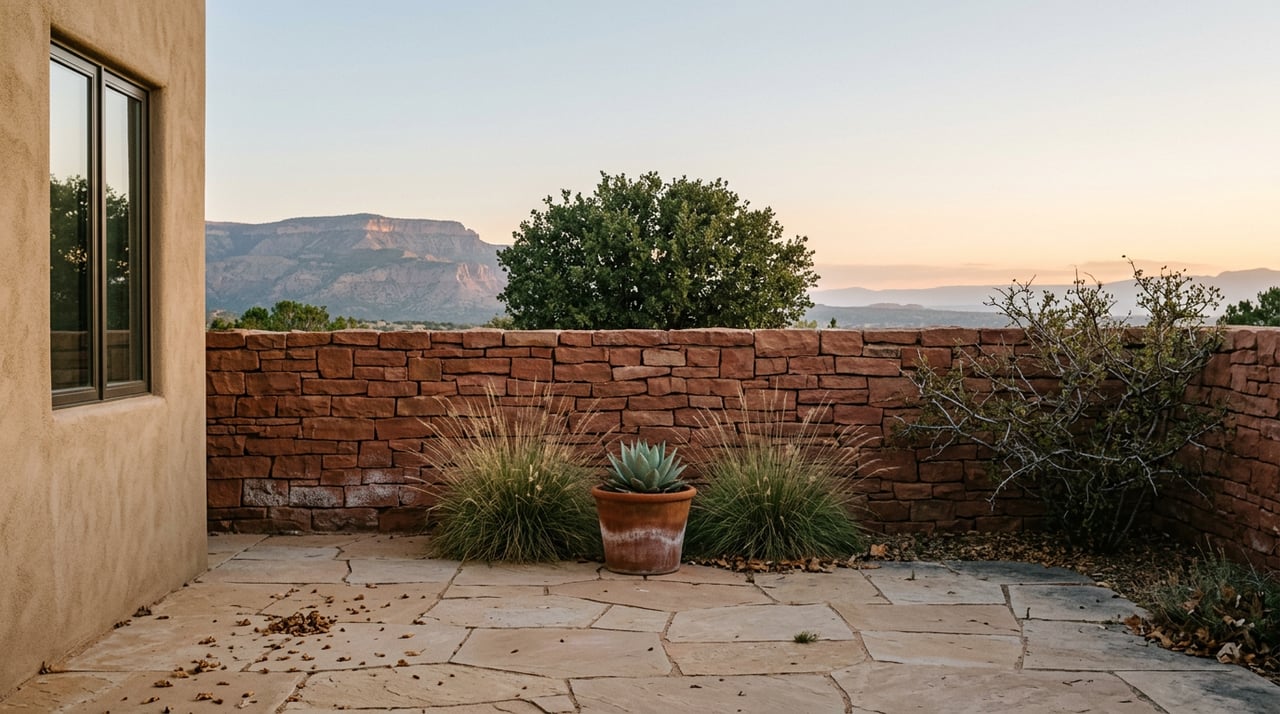
Start by mapping your best sightlines. Place dining and lounge areas to face the view, and keep the hardscape footprint modest so you preserve natural rock and native plant character. On sloped lots, avoid heavy grading in drainages and use light-touch platforms or steps to reduce erosion and keep sightlines clean. The Sedona Fire District’s Wildland-Urban Interface amendments also remind homeowners to consider slope and vegetation patterns when planning outdoor features.
Smart shade that keeps comfort
Layer shade so you can tune comfort without losing the view.
- Permanent structures: pergolas with adjustable louvers or retractable awnings provide predictable midday coverage.
- Seasonal shade: deciduous trees or trained vines cool patios in summer and let in winter light.
- Flexible shade: umbrellas or shade sails are quick to adjust for gatherings.
Designers use overhang depth and vertical fins to tame west-facing sun, strategies supported by the Whole Building Design Guide overview of shading strategies. If you add trees, keep spacing and pruning consistent with Firewise guidance to maintain safe clearances.
Low‑water plants that look lush
You can have color, texture, and year-round structure without heavy watering. Use the regional palette for the Verde Valley/Sedona elevation band from the Verde Valley low-water plant list. A few standouts:
- Trees and accents: Arizona cypress, pinyon pine, velvet mesquite, Arizona white oak, Parry’s agave.
- Shrubs and accents: manzanita, cliffrose, Apache plume, yucca, sotol, prickly pear.
- Grasses and perennials: sideoats grama, blue grama, penstemon, globe mallow, desert marigold.
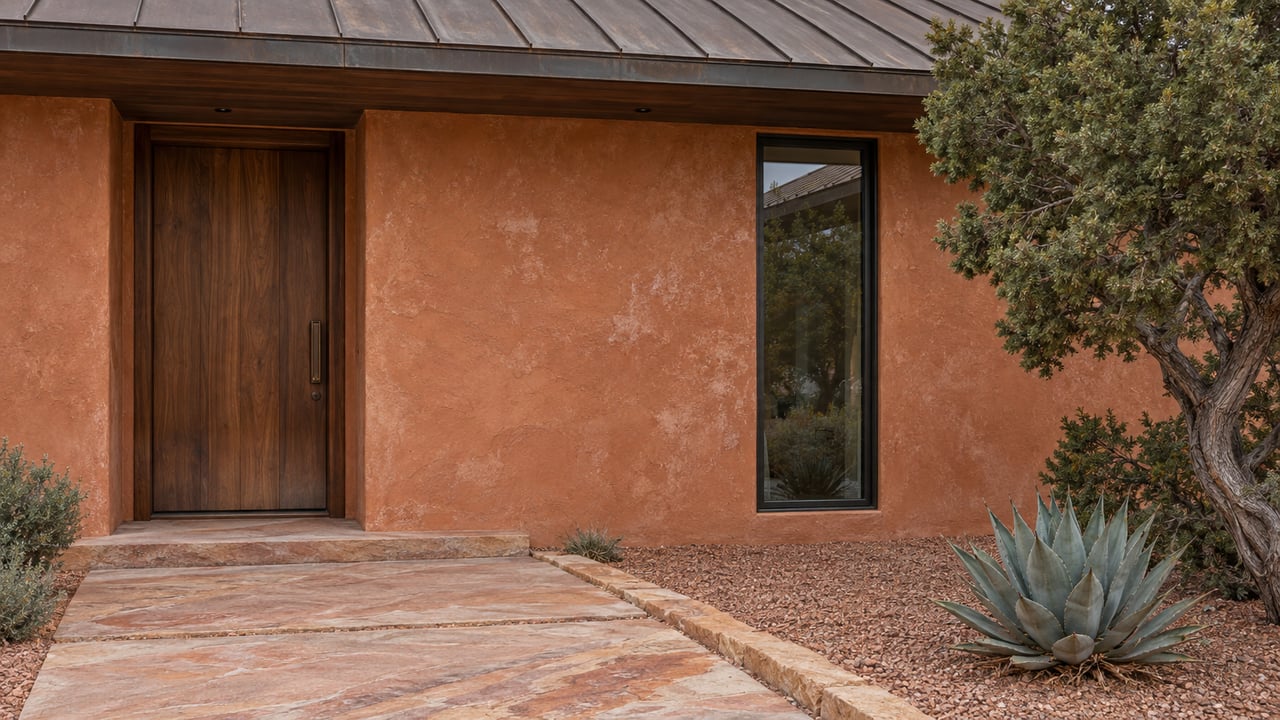
Group plants into hydrozones so you can water efficiently. Use gravel or stone mulch near the home for a tidy look that also reduces ignition risk.
Water management and irrigation
Drip irrigation gives plants the water they need with minimal waste. Place emitters along the dripline of trees and shrubs, not at the trunk, and set schedules by plant type and soil depth. The Landscape Watering by the Numbers guide shows how to match run times to root zones.
Capture rain where you can. Add discreet swales, small infiltration basins, or rain barrels to slow monsoon runoff and recharge the soil. On slopes, use rock terraces and permeable pavers so water spreads and soaks rather than rushing downslope.
Fire features with safety
Fire features add ambiance, but safety and compliance come first in Sedona’s Wildland-Urban Interface. Prefer gas fire tables or built-in gas fireplaces set in noncombustible hardscape. Keep clearances from structures and overhangs, and store wood and cushions outside the immediate 0 to 5 feet around your home. Review the Sedona Fire District WUI amendments before you build.
Seasonal restrictions can limit open flames. Before installing or using any fire feature, check Yavapai County seasonal fire restrictions. For defensible-space best practices, see the Yavapai County Firewise guidance.
Dark‑sky lighting that sets the mood
Sedona is a designated dark-sky community with a strict lighting code. Use fully shielded fixtures aimed down, keep light on your property, and choose warm sources. For security lighting covered by the code, use narrow-spectrum amber LEDs or warm light sources not exceeding 2,700 K. Program landscape lights to switch off by 10:00 p.m. unless otherwise allowed. Review Sedona’s Exterior Lighting Code (LDC Section 5.8) if you are adding or modifying exterior lighting.
For ambiance, layer low-level path lights with shielded step and sconce fixtures. Aim for subtle, not bright. Avoid broad uplighting and permanent unshielded string lights unless specifically approved, and count all fixtures toward site lumen limits where required.
Hardscape and durable finishes
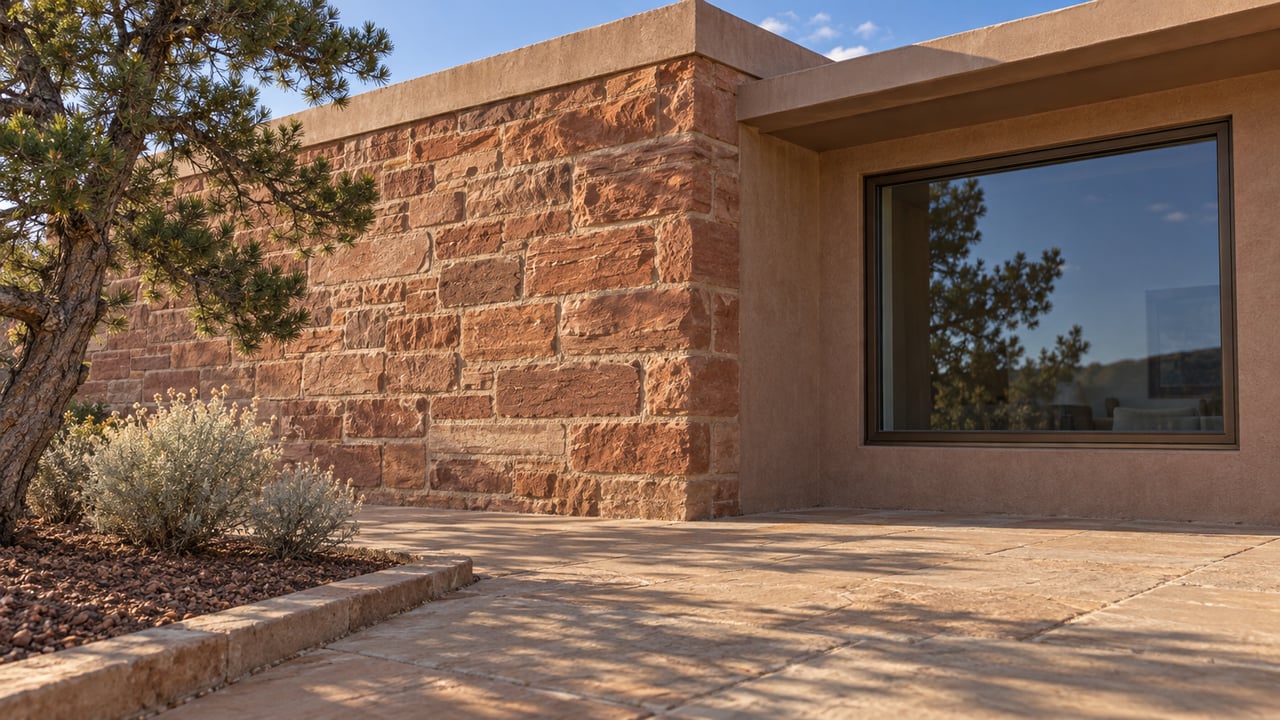
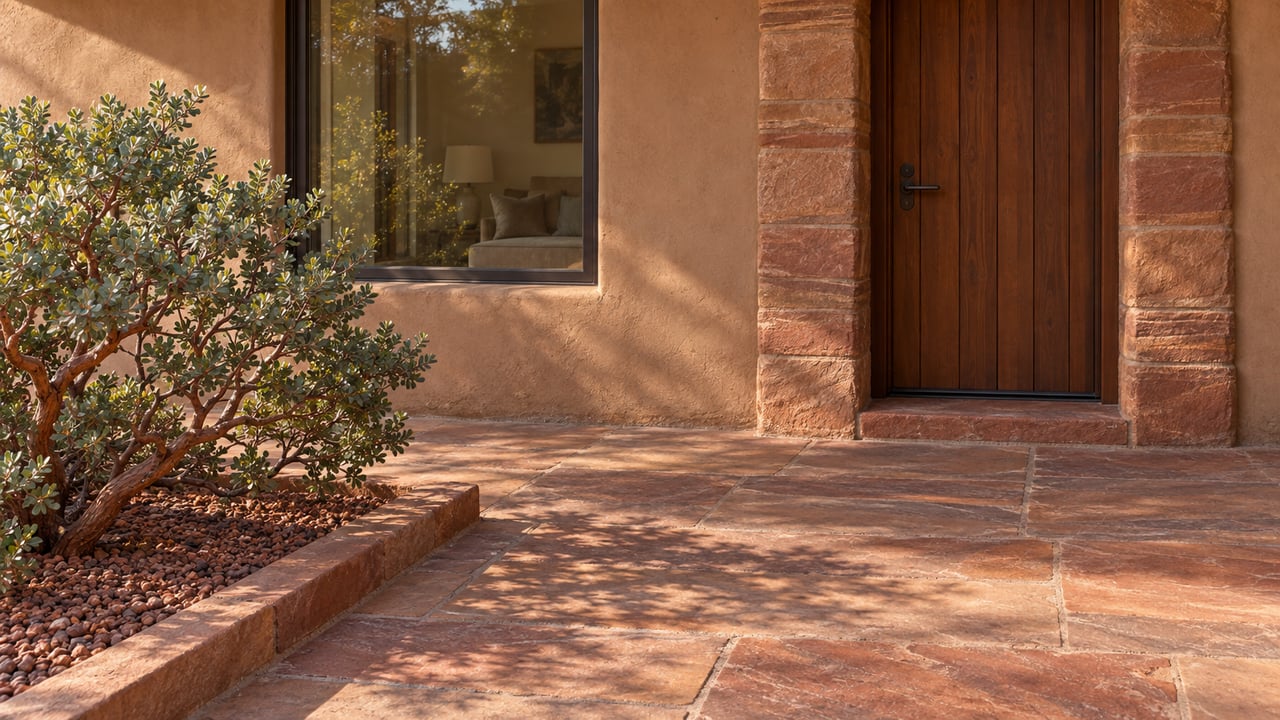
Monsoon rain and summer sun are hard on surfaces. Favor permeable pavers, banded stone, or gravel joints to reduce runoff and heat buildup. On slopes, add discreet swales or drains to route water away from the home.
For furnishings, pick powder-coated aluminum or stainless frames, solution-dyed acrylic fabrics, and quick-drain cushions. Lighter colors stay cooler. Use rust-resistant hardware and covers that breathe in dry air.
A quick homeowner checklist
- Walk your lot at midday and evening to map sun, wind, and view corridors.
- Note defensible-space zones: Immediate 0–5 ft, Intermediate 5–30 ft, Extended beyond. Keep combustible items out of the first zone. See Yavapai County Firewise guidance.
- Verify any fire pit or fireplace use against Yavapai County seasonal fire restrictions.
- Choose plants from the Verde Valley low-water plant list and group by hydrozone.
- Set drip schedules with the Landscape Watering by the Numbers guide.
- Use fully shielded, warm fixtures and timers per Sedona’s lighting code.
Design for resale appeal
In Sedona, buyers value outdoor rooms that spotlight views, are easy to maintain, and respect dark-sky and Firewise standards. Those choices are not just practical; they show stewardship of place. Local organizations highlight water-wise landscapes and compliant lighting as community assets, and you can see that emphasis in Keep Sedona Beautiful’s programs and awards.
Thoughtful design supports daily living and can help your property stand out when you sell. Clear view corridors, usable shade, low-water planting, safe fire features, and properly shielded lighting all communicate quality and care.
Ready to create a Sedona outdoor space that fits your lifestyle and the local rules? If you are buying, building, or preparing to sell, connect with Liz Adams for neighborhood-level guidance and a clear plan that aligns design choices with your property goals.
FAQs
What climate factors should I plan for in a Sedona outdoor space?
- Sedona’s elevation around 4,430 feet means strong sun, big day-night swings, a July–August monsoon window, and occasional winter freezes. Design for shade, drainage, and durable materials. See the NOAA station data for Sedona.
Which low-water plants do well at Sedona’s elevation?
- From the regional list: Arizona cypress, pinyon pine, velvet mesquite, manzanita, cliffrose, yucca, sotol, prickly pear, sideoats grama, penstemon, globe mallow. Explore the Verde Valley low-water plant list.
Do I need to follow special rules for exterior lighting in Sedona?
- Yes. Use fully shielded, warm fixtures; security lighting covered by code should be 2,700 K or lower. Many landscape lights must turn off by 10:00 p.m. Review Sedona’s Exterior Lighting Code (LDC Section 5.8) before installing or changing lighting.
How can I add a fire pit safely at my Sedona home?
- Prefer gas in noncombustible hardscape, keep clearances, and follow defensible-space rules. Always check Yavapai County seasonal fire restrictions before using open flames and consult the Sedona Fire District WUI amendments.
What are defensible-space zones for landscaping near my house?
- Keep the first 0–5 feet lean and clean with noncombustible groundcover, then space and prune plants in the 5–30 feet zone. Find best practices in the Yavapai County Firewise guidance.
How should I set drip irrigation in Sedona?
- Group plants by hydrozone, place emitters at the dripline, and water to the root depth. Use the Landscape Watering by the Numbers guide to size run times and frequency.