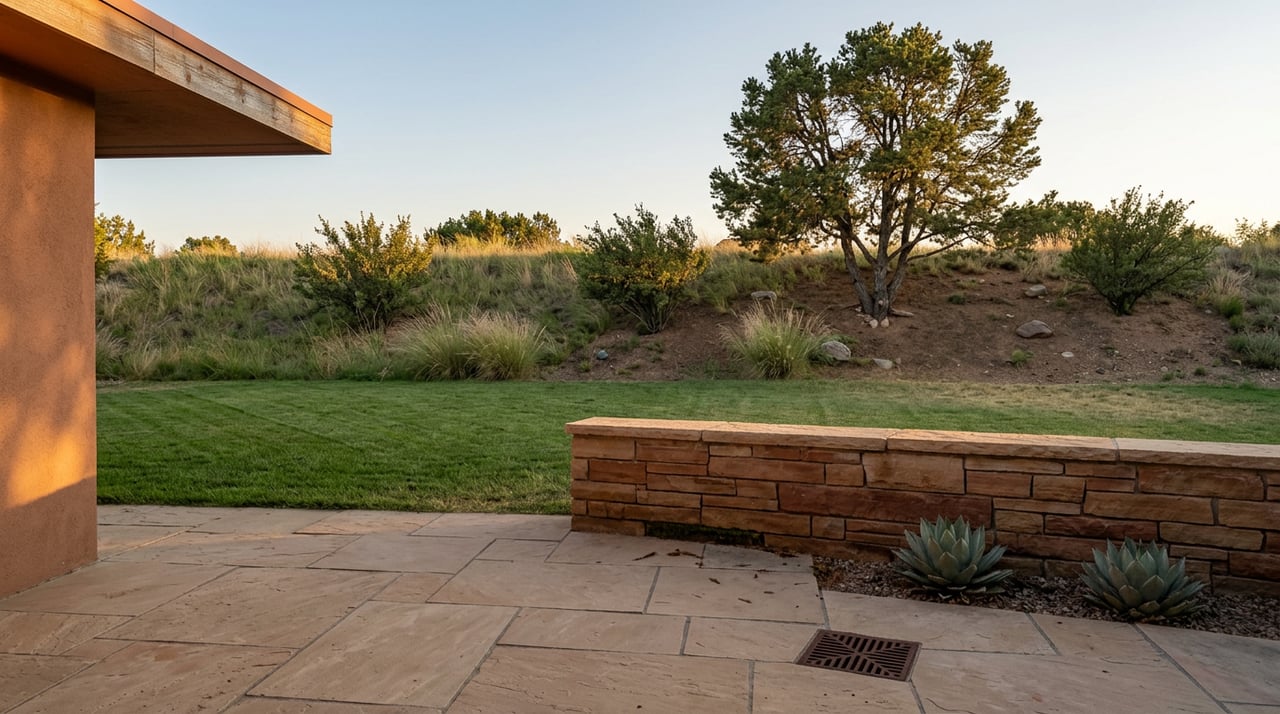
A buyer looking at a home along Bell Rock Boulevard in the Village of Oak Creek will often say some version of the same thing during a walkthrough: the fairway view sold them before they got past the entry. What follows that reaction, more often than not, is an assumption. Something like this:
"So the HOA dues cover the club, right? We just show up and play."
They don't, and you don't. That assumption is the single most common source of friction on golf-adjacent contracts in this part of Sedona, and it comes from a reasonable place. The house backs to a golf course. The golf course looks like an amenity. In most planned communities, an amenity backed by mandatory dues means the owner gets to use it. The Village of Oak Creek doesn't work that way, and understanding why changes how you should read a listing, write an offer, or price a sale here.
The Course Is an HOA Asset. It Is Not an HOA Benefit.
The Village of Oakcreek Association, known locally as VOCA, is the largest homeowners association in the historic Big Park region and it does, in fact, own the golf course. It's called Oakcreek Country Club, an 18-hole layout designed by Robert Trent Jones Sr. and Robert Trent Jones Jr. that has anchored Sedona golf for decades. VOCA also owns the clubhouse where a bistro operates, along with the community park that holds the tennis and pickleball courts and the children's playground.
Here's where the assumption breaks down. VOCA's own governing bylaws require the golf course to operate on its own financial footing, separate from the association's general dues. The restaurant inside the clubhouse isn't run by VOCA either. It's leased to an independent operator who runs it as its own business. So while VOCA is technically the landlord for the course and the clubhouse, membership in VOCA does not include a membership at Oakcreek Country Club. Golf access is sold separately, through its own membership tiers, to members and the general public alike, because the course is open to public play.
This is not a minor technicality. It means a buyer who prices in "free golf" as part of the HOA dues has misread the deal. A seller who markets a listing as "golf course living" without clarifying that membership is a separate purchase is setting up a conversation that should have happened before the offer, not during the walk-through.
What Actually Transfers With the House
| Comes with the property | Requires a separate purchase or membership |
|---|---|
| The red-rock view and lot line adjacent to the fairway | Tee times and course access |
| Use of VOCA's community park, tennis and pickleball courts (if the home is within VOCA) | Membership in Oakcreek Country Club's golf program |
| Whatever architectural and use restrictions apply to that specific lot | Discounted or member-rate dining at the on-site bistro |
| The obligation to pay dues to whichever association governs that lot | Handicap services, men's and women's club association memberships |
The left column is what you're buying when you close. The right column is what you negotiate with the club directly, on its own pricing and its own terms, regardless of who owns the house next to the ninth green.
"The Village" Is Not One Homeowners Association
The second assumption that trips people up is treating "Village of Oak Creek" as a single governed community. It isn't. VOCA is the largest association in the area, but it covers roughly 45 percent of the Village of Oak Creek and Big Park community. The rest of the area is governed by a patchwork of separate associations, each with its own management company, its own dues structure, and its own paperwork.
A short, real accounting of what's actually out there:
- The Villages of Oak Creek Master Association, managed by Wise Property Management, holds governing authority over Amberly, Belmont, Hamlet, and the Sanctuary.
- The Sanctuary carries a second layer on top of that master association: its own homeowners association, managed separately by Inframark, which also controls gate access for that gated community.
- Pine Ridge and Baywood Townhome Communities are managed by Castle Group.
- Harvest Glen is managed by The Vanguard Management Group.
- Summerwood is managed by Greenacre Properties.
None of this is coordinated by a single Village-wide authority. The closest thing to a unifying body is the Big Park Council, a nonprofit advisory organization created in 1997 at Yavapai County's request. It represents more than 6,100 residents through 23 member organizations and it speaks to the county and state on behalf of the whole region, but it does not collect assessments, does not enforce covenants, and does not issue resale paperwork. It is a voice for the community, not a homeowners association, and confusing the two is an easy mistake for an out-of-area buyer to make.
The practical upshot: a listing that says "Village of Oak Creek" tells you almost nothing about which association actually governs the lot, what its dues are, or what its resale disclosure process looks like. That has to be confirmed subdivision by subdivision.
The Paperwork Difference That Actually Costs Money
Arizona law puts a firm ceiling on what an association can charge to prepare the resale disclosure statement a buyer is entitled to before closing. Under state statute, that fee is capped at an aggregate of $400, covering the disclosure statement itself, any lien estoppel letter, and related transfer services. An association can add a rush fee of up to $100 if it has to turn the documents around within 72 hours, and up to $50 more if 30 days have passed since the original statement was issued. That's the entire universe of what the disclosure fee can legally cost, no matter how many line items a management company tries to break it into.
A transfer fee is a different animal entirely, and it isn't capped by that same statute. It's only permitted if the association's CC&Rs specifically authorize it, and where it exists, it can run into the thousands of dollars on a single sale. The two fees get confused constantly because they show up on the same closing statement and sound like they're covering the same thing. They aren't, and knowing the difference is the kind of detail that belongs in a contract review, not a Google search during escrow.
Here's the part specific to golf-adjacent homes in this area: if a property sits in a community like the Sanctuary, which has both a master association and its own sub-association layered on top, you may be looking at two separate disclosure requests, each capable of carrying its own fee up to that $400 cap. A buyer or seller who budgeted for one HOA disclosure fee can be caught off guard by two, on top of whatever transfer fee the specific CC&Rs allow. The statute also requires the association to deliver that disclosure statement within ten business days of a written request, and the buyer generally gets a window of about five days to review it once received. Miss that clock on a double-association property and the closing timeline slips before anyone realizes why.
What This Means If You're Structuring an Offer or a Sale
If you're buying a golf-adjacent home here, the sequence matters. Confirm which association actually holds jurisdiction over that specific lot before earnest money moves, not after. If more than one association layer applies, request both disclosure statements as early as the contract allows, since the ten-business-day clock only starts once the request is in writing. If golf access matters to your decision, treat it as a separate line item to negotiate with the club, not a feature you're assuming comes bundled with the dues.
If you're selling, the fix is on the listing side. State plainly which association governs the property and what its dues actually cover. If the home is golf-adjacent, say so as a lot characteristic, not a membership perk, and let the buyer make their own arrangement with the club. That precision heads off a renegotiation later in escrow when the buyer discovers the clubhouse discount they assumed was included never existed.
This is precisely the kind of multi-layered governance and disclosure timing that a JD-trained negotiator is built to catch before it becomes a delay. Structuring a clean offer or a clean listing in a community with more than one association means reading the CC&Rs for exactly what they authorize, not what the listing photos imply.
Frequently Asked Questions
Does owning a home that backs to Oakcreek Country Club get me a discount on membership? No. The course is owned by VOCA as a community asset, but its bylaws require it to operate independently of association dues, and membership is sold on its own tiers to the general public and homeowners alike.
Is the Big Park Council my homeowners association? No. It's a nonprofit advisory body that represents the wider Big Park region to the county and state. It doesn't set dues, enforce covenants, or issue resale disclosure statements. That work belongs to whichever HOA actually governs your specific subdivision.
How do I find out which association governs a specific Village of Oak Creek listing before I write an offer? Ask directly, in writing, before the offer goes in. Given how many separate associations operate across the Village, and that some communities like the Sanctuary carry two layers of governance, confirming this upfront avoids a surprise disclosure fee or a missed statutory deadline later in escrow.
A golf-course view in the Village of Oak Creek is real and it's part of what makes this stretch of Sedona worth the drive down SR-179. What it comes with, and what it doesn't, is a matter of which association holds the paperwork and what the club charges on its own terms. If you're weighing a purchase or a sale in this part of the Village and want someone who reads the CC&Rs before you write the offer, Oak Creek Realty is built for exactly this kind of transaction. Schedule a free consultation and let's confirm what you're actually buying before you're under contract.