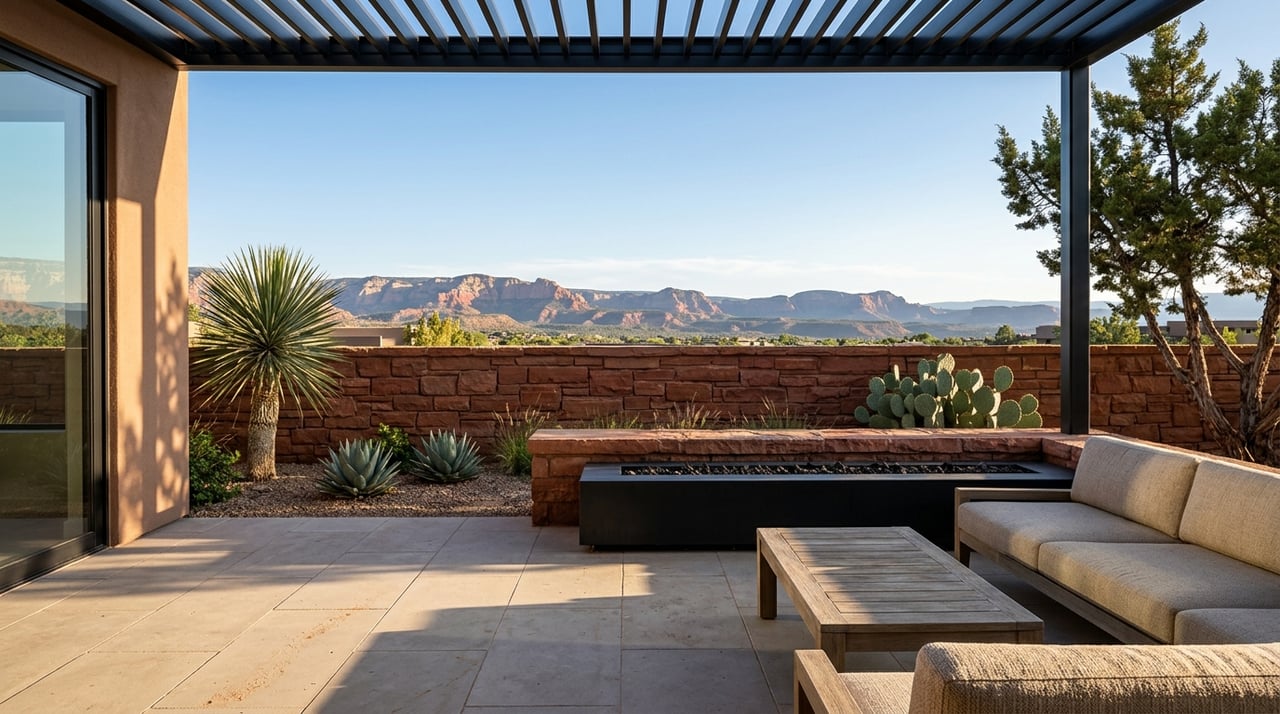
If you are drawn to Chapel area real estate in Sedona, chances are the view is a big part of the appeal. In this part of town, a home is not just about square footage or finishes. It is also about how the lot sits on the land, what it faces, and whether that dramatic red rock backdrop truly lives up to the price. This guide will help you understand why some Chapel homes capture iconic views better than others, and what to look for before you buy. Let’s dive in.
Why Chapel views stand out
The Chapel area benefits from one of Sedona’s most recognizable visual settings. The Chapel of the Holy Cross was built into parallel rock buttes rising from a 200-foot rock formation, and it remains one of the city’s designated historic landmarks. For nearby homeowners, that creates a rare connection to a landmark that is instantly associated with Sedona.
Views also carry weight because of Sedona’s terrain and limited buildable land. The city notes elevations range from about 4,000 feet along Oak Creek to 5,600 feet at Coffee Pot Rock, with City Hall at 4,350 feet. Sedona’s 2024 Community Plan also states the city was 82% built-out in 2022 and that 49% of land within city limits is National Forest, which helps explain why elevated and well-positioned homes can command a premium.
How lot position shapes the view
A Chapel home can have a Sedona address and still offer a very different experience from the property next door. On hillside sites, even a small shift in elevation, orientation, or ridge position can change what you see from the main living spaces. A lot that sits high on a slope may open to broader sky and rock views, while another may tuck behind terrain and feel more enclosed.
Sedona’s land-use standards reflect how important site fit is in this market. The city’s Land Development Code says rooflines should follow the slope and that site design should respond to natural landforms, vegetation, rock outcroppings, floodways, floodplains, and drainageways. It also says building scale, orientation, and design should relate to the site and surrounding streets.
For you as a buyer, that means the best view homes usually get several things right at once. They combine elevation, orientation, and thoughtful placement on the lot. In a neighborhood like Chapel, those details can make the difference between a nice backdrop and a truly memorable setting.
What makes a view worth the premium
Not every advertised view should command the same price. A strong view premium is usually easier to justify when the sightline feels open, well-oriented, and less likely to be interrupted. The real value often comes from how the home interacts with the land over time, not just how the photos look on listing day.
In practical terms, a premium view home often offers:
- A higher site position on the parcel
- Main rooms oriented toward red rock formations or the Chapel backdrop
- Less intrusion from neighboring rooflines
- Outdoor spaces that take advantage of the sightline
- Parcel context that makes the view feel more durable
That last point matters. If a dramatic vista depends on a nearby vacant lot staying untouched, the long-term value may be less certain than buyers first assume.
Start with maps, not marketing
Before you fall in love with listing photos, study the parcel. The City of Sedona GIS viewer includes parcel boundaries, zoning, flood zones, building footprints, and other layers. The city also says county maps are the official hub for parcel information, though it warns its own GIS data is for general planning only and may be off by several hundred feet in x/y coordinates.
Coconino County also notes that assessor maps show parcel shape, dimensions, acreage, subdivision names, surrounding land, and political boundaries, but they are approximate and not a survey. Since Sedona spans both Coconino and Yavapai counties, you should confirm which county the property is in before relying on parcel details.
This matters because a view is about more than direction. It is about boundaries, adjacent land, terrain, and what may be possible on neighboring sites. Good research helps you separate a truly superior homesite from a listing with great photography.
What to check during a showing
Photos can make almost any view look bigger, wider, and more private than it feels in person. During a showing, take time to stand where you would actually spend your day. Focus on the living room, kitchen, primary bedroom, and main patio or deck.
Pay close attention to these details:
- The actual line of sight from primary living areas
- Whether trees or neighboring rooflines interrupt the view
- How the home sits relative to the slope
- Whether the best view is from inside, outside, or both
- Whether the sightline depends on an undeveloped neighboring lot
A property may have an impressive angle from one patio corner but a far less compelling outlook from the rooms you use most. In a luxury purchase, that difference matters.
Topography affects more than scenery
In the Chapel area, views and site challenges often come together. Sedona’s Community Plan notes that many vacant lots remain undeveloped for reasons such as steep cliffs, floodplains, difficult access, and other building challenges. So while a dramatic lot may offer a stronger panorama, it may also involve more complexity.
For existing homes, those conditions can still shape value and future use. Steeper sites may affect driveway access, drainage planning, retaining work, and the way outdoor areas are designed. If you are comparing two homes with similar asking prices, the one with the more buildable and usable site may offer a better balance of beauty and practicality.
Why site analysis matters in Chapel
Sedona’s site-analysis standards give buyers a useful framework for understanding hillside properties. The city highlights physical site conditions, unique attributes, neighboring environment, natural landforms, mature native trees, underlying geology, drainageways, setbacks, and how access and structures fit the contour of the land. County requirements reinforce that approach by requiring topographic mapping, grading information, drainage details, and building-elevation data.
That may sound technical, but it translates into a simple idea. In Chapel, the land itself often decides how well a home can capture the view. When you understand the site, you are in a much better position to judge whether the price reflects lasting value.
Outdoor living is part of the view
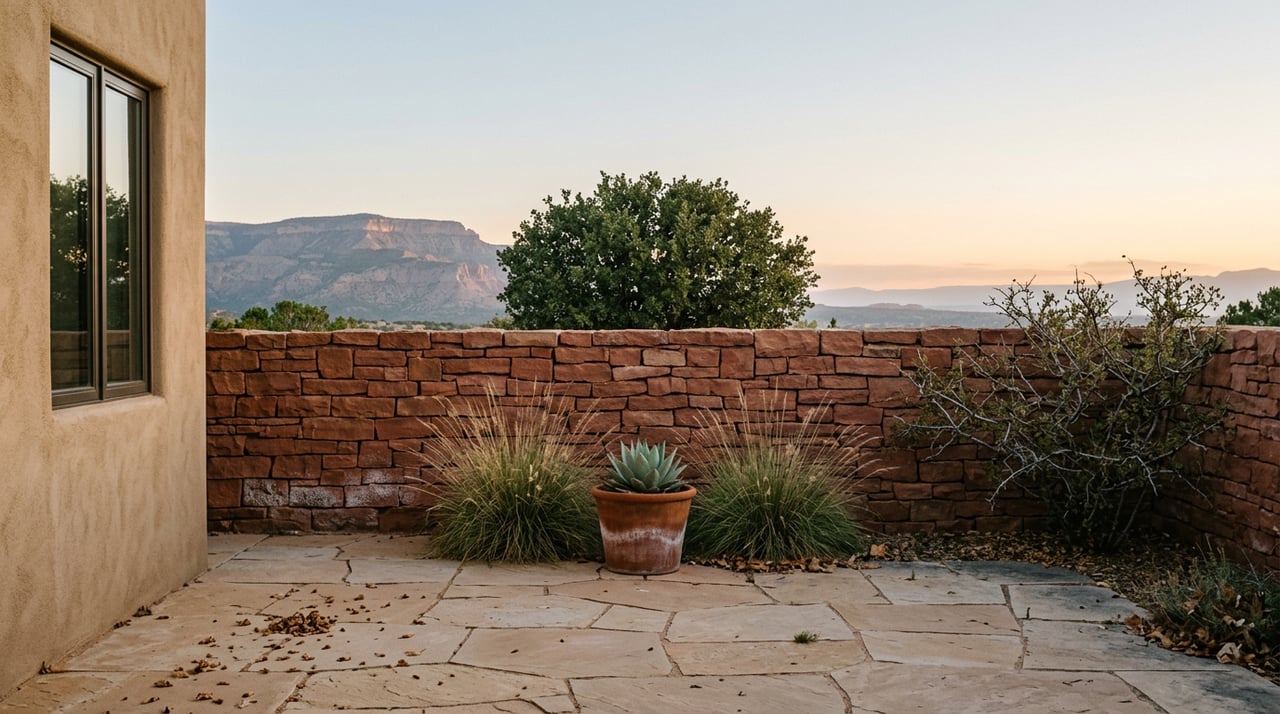
In Sedona, the view experience does not stop at the windows. Patios, decks, and outdoor seating areas are often a major part of how you enjoy a property. In the Chapel area, the best homes usually create a strong connection between indoor comfort and outdoor scenery.
Still, outdoor enjoyment is shaped by more than the panorama. Sedona is an International Dark Sky Community, and the city says its lighting rules are designed to direct light only where it is needed. For you, that means exterior fixture placement, glare control, and nighttime ambiance should all be part of the evaluation when comparing homes with outdoor living spaces.
Landscaping can protect or soften a sightline
A view home is not just framed by architecture. It is also shaped by the landscape around it. Sedona emphasizes preserving scenic beauty through building color, massing, tree retention, fences, walls, screening, and landscaping that blends with the natural environment.
That can work in your favor, but it can also affect what you see. Mature trees, retaining walls, and landscape design may preserve privacy or soften the look of a hillside site, yet they can also partially mask a red rock sightline. In some Chapel properties, the difference between a broad open view and a filtered one comes down to how these elements interact at eye level.
How to stay disciplined on price
A remarkable view can be emotional, which is exactly why pricing discipline matters. Coconino County says the Sales Comparison Approach is the most common method for land valuation and is commonly used for residential homes and vacant land. The county also notes that subdivision properties are often valued based on sales in the same or a comparable subdivision.
That means the cleanest way to judge a view premium is to compare the home against recent sales that share similar location and parcel context. If the premium shows up in comparable sales, it is easier to support. If it appears mainly in marketing language, you may want to dig deeper before stretching your budget.
The bottom line on Chapel views
The best Chapel On The Hill homes do more than offer a pretty backdrop. They combine elevation, orientation, landmark relationship, and site fit in a way that makes the view feel both immediate and lasting. In a built-out market like Sedona, those qualities can be hard to duplicate.
If you want to buy or sell in this part of Sedona, it helps to look beyond the obvious. A careful review of parcel context, topography, outdoor usability, and comparable sales can tell you whether a view is simply attractive or truly worth a premium. For thoughtful guidance on Chapel neighborhood real estate and other view-driven Sedona properties, connect with Liz Adams.
FAQs
What makes Chapel neighborhood homes in Sedona stand out for views?
- Chapel area homes can stand out because of their relationship to Sedona’s red rock terrain, elevation changes, and proximity to the Chapel of the Holy Cross, which is one of the city’s designated historic landmarks.
How can you tell if a Sedona view home is worth the price?
- You can evaluate whether a view premium is justified by checking the lot’s elevation, orientation, neighboring roofline intrusion, outdoor usability, and recent comparable sales in the same or a similar subdivision.
Why do some Chapel lots in Sedona have better views than others?
- Some lots capture stronger views because they sit higher on a slope, face open sky or major rock formations more directly, and are less affected by ridges, trees, or nearby structures.
What should you review before buying a Chapel area home in Sedona?
- You should review parcel maps, zoning context, flood zone information, topography, drainage considerations, and whether the current sightline could change based on neighboring land.
How does outdoor living affect the value of a Chapel view home?
- Outdoor living adds to the overall view experience because patios, decks, lighting, and landscape design all influence how comfortably and fully you can enjoy the setting day and night.